
Integrative phage biology
Decoding how phages take control of bacteria.
We combine bioinformatics and machine learning with microbiology and biochemistry to understand bacteriophage infection — from changes across entire transcriptomes to the molecular mechanisms behind them.
Our goal is to uncover how phages redirect bacterial processes, how bacteria respond, and what determines the outcome of infection. Ultimately, we want to find useful ways to repurpose these mechanisms to control bacteria.

why Bacteriophages?
Small viruses. Remarkable biology.
Bacteriophages — or phages — are viruses that infect bacteria. Their survival depends on navigating bacterial defences and using the host’s molecular machinery to reproduce. These interactions reveal fundamental principles of biology and offer opportunities for biotechnology and medicine.
A window into molecular biology
Phages have evolved diverse strategies to control bacterial cells.
Studying these strategies reveals how biological information is regulated and how viruses and hosts shape one another.
A source of tools for biotechnology
From enzymes to systems for molecular recognition, phages provide tools for studying and engineering biology.
Understanding their molecular mechanisms helps us discover new functions and explore their potential applications.
New Routes for antibacterials
Phages can kill susceptible bacteria, making them promising candidates for antibacterial approaches.
Understanding why infections succeed or fail — and how phages interact in combinations — is essential to developing reliable strategies.
How we study phages
Different layers. Connected questions.
Phage infections are often studied using dual RNA-seq, which simultaneously interrogates the transcriptome of host and phage during infection across infection phases. This approach enables to comprehensively decipher gene expression – phage- and host-based – across the time course of an infection. In previous work, we assessed this expression across transcriptome and proteome at the example of the model revealing new concepts of coupled and decoupled gene expression in phage infection.
Comparable studies have been conduced largely on the transcriptome level on a diversity of phages. However, these datasets were neither processed uniformly, nor made available publicly in a comparable manner. Therefore, we built the PhageExpressionAtlas to allow for easy access and visual analysis of phage dual RNA-seq data directly from the browser. We will use and develop this resource to further explore RNA-based regulation in phage infections.
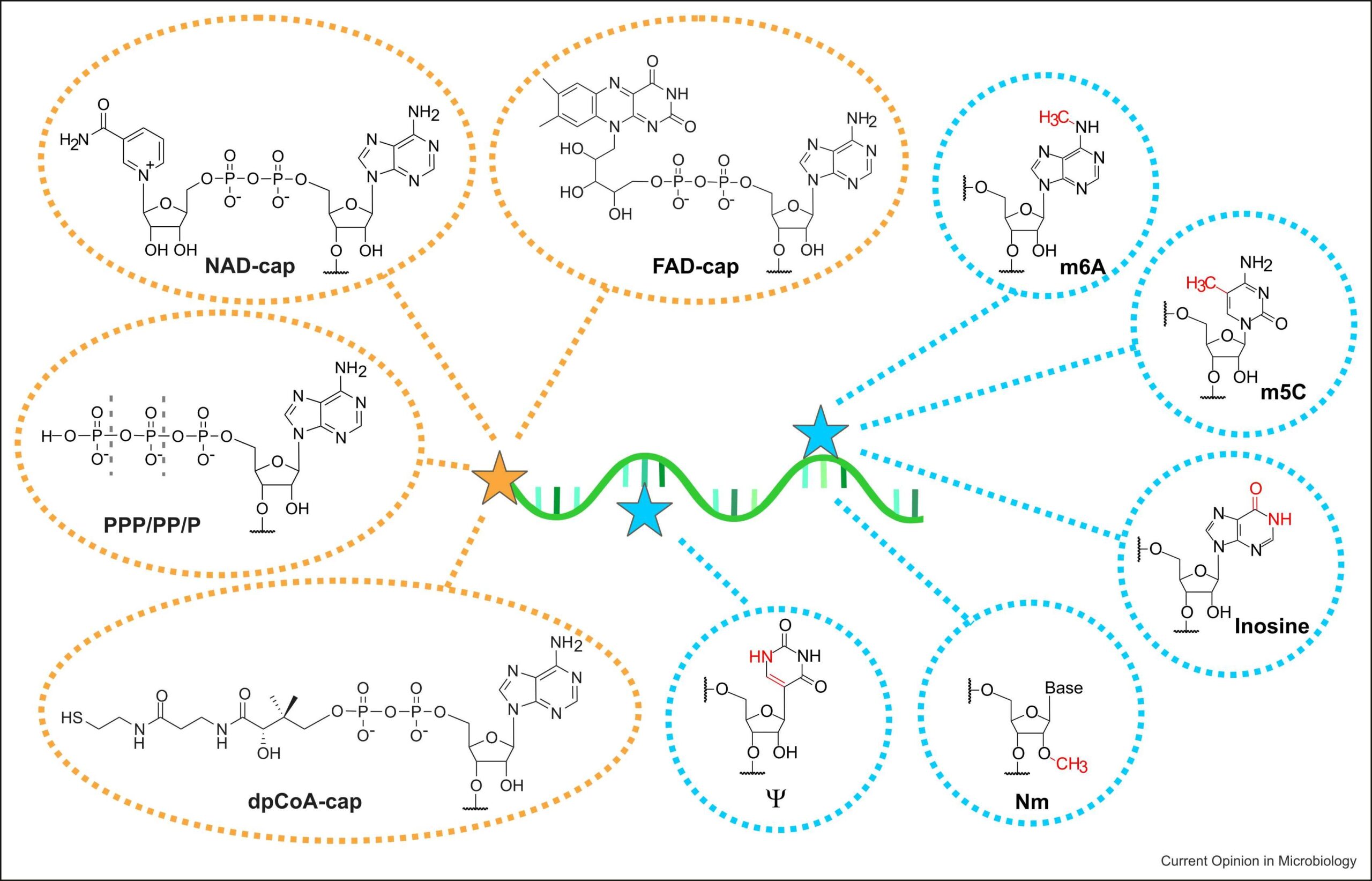
The so-called epitranscriptome encompasses the diverse chemical modifications of RNA. In bacteria, RNA modifications are well-known to decorate ribosomal RNAs (rRNAs) and transfer RNAs (tRNAs), but the roles of these RNA modifications – not only on rRNA and tRNA, but also on mRNA – in phage infections are rarely explored. Previous work showed how epitranscriptomics in phages leads to ground breaking discoveries (RNAylation) and that there is so much more to discover in bacteriophages (Review). We set out to study the interplay of phages and the host on the epitranscriptomic level aiming to unravel novel antibacterial targeting points.
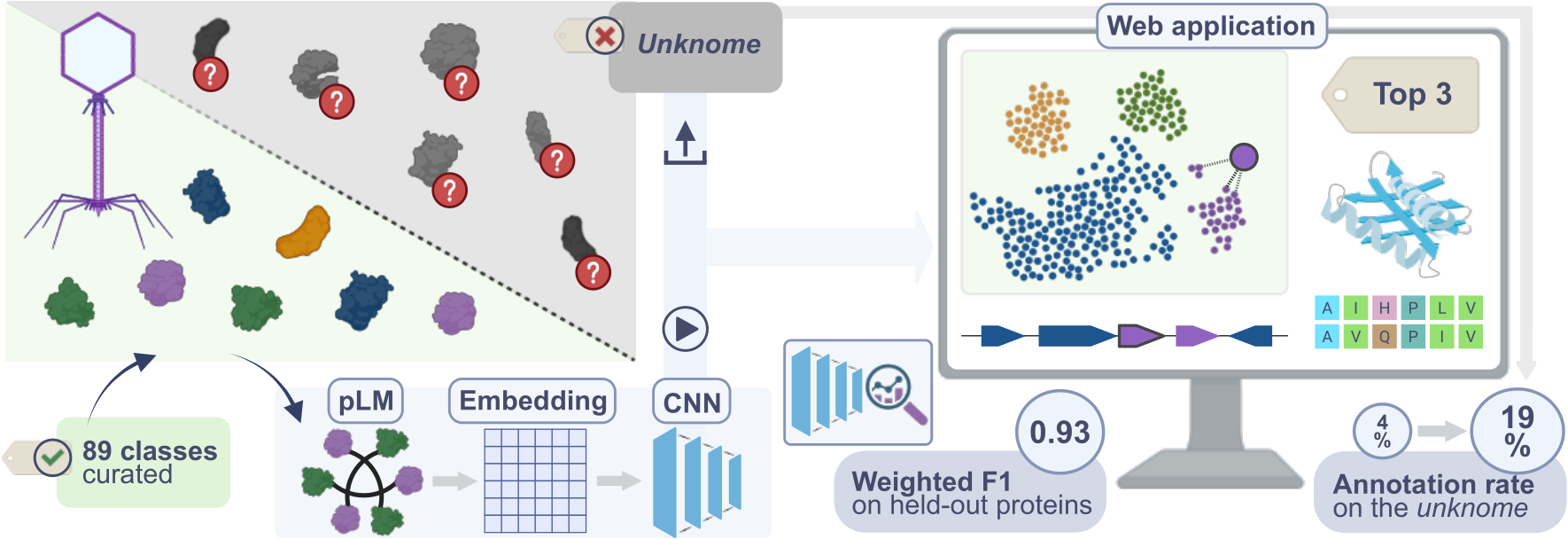
On average, 50 % of a phages protein-coding gene remain without functional annotation, when homology evidence using Pharokka or Phold is lacking. For this, we employed the protein language model ProtT5 to predict phage protein functions even in the absence of homology evidence. Our model PhageGAP is available via a web server to enable hypothesis generation in the absence of sequence of structure homology. It increases annotation of unknown phage proteins by 15 % compared to classical approaches. We aim to harness this model to systematically decode what we call the phage „unknowe“.
Get an idea here